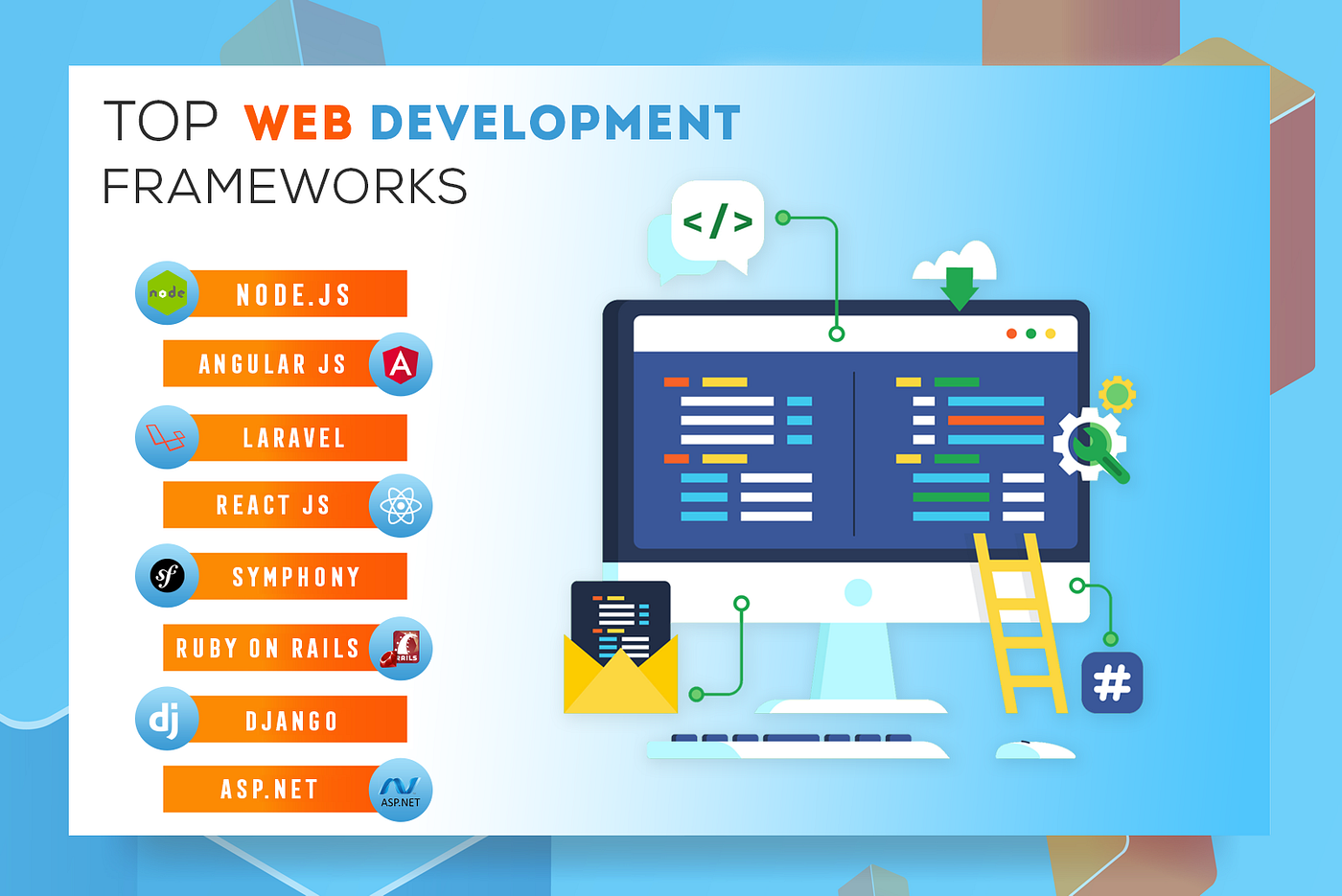
Web development framework are in trending due to their efficiency and vast support. Web development has always been one of the most dynamic fields in technology. From building static websites in the early 2000s to creating highly interactive, AI-powered web applications today, the tools developers use have changed dramatically. In 2025, web developers have access to a wide range of frameworks that make building websites and apps faster, easier, and more scalable. But with so many options, which ones stand out as the best programming frameworks for web development right now?

Table of Contents
What Are Web Development Frameworks?
A framework is a pre-built structure or toolkit that helps developers build applications more efficiently. Instead of writing every piece of code from scratch, frameworks provide templates, libraries, and reusable components to save time and reduce errors. Frameworks can be divided into:
- Front-End Frameworks (focus on user interface and experience)
- Back-End Frameworks (focus on server-side logic and database management)
- Full-Stack Frameworks (combine both front-end and back-end development)
Top Front-End Frameworks in 2025
1. React.js
- Developed by Facebook, React remains the king of front-end frameworks.
- Known for its component-based architecture, speed, and strong community support.
- Ideal for building dynamic user interfaces like dashboards, e-commerce platforms, and social media apps.
2. Vue.js
- Lightweight, flexible, and beginner-friendly.
- Vue’s simplicity makes it popular among startups and small teams.
- Great for rapid prototyping and building interactive features with minimal setup.
3. Angular
- A full-featured framework by Google.
- Perfect for large-scale enterprise applications requiring strong structure and scalability.
- Comes with built-in tools for routing, forms, and testing.
Top Back-End Frameworks in 2025
4. Node.js (with Express.js)
- Node.js isn’t just a framework — it’s a runtime environment, but when paired with Express.js, it becomes one of the most popular back-end frameworks.
- Enables building fast, scalable, and real-time applications (like chat apps and streaming platforms).
5. Django
- Python-based, focusing on clean and secure development.
- Known for its “batteries included” philosophy — it comes with tools for authentication, databases, and security right out of the box.
- Used by companies like Instagram and Spotify.
6. Ruby on Rails
- Still a favorite among startups due to its rapid development speed.
- Excellent for building MVPs (Minimum Viable Products) and web apps quickly.
Top Full-Stack Frameworks in 2025
7. Next.js
- Built on top of React, Next.js makes server-side rendering and static site generation seamless.
- Perfect for SEO-friendly websites and fast-loading apps.
- Great choice for developers building modern, scalable web apps.
8. Laravel
- PHP-based framework with elegant syntax.
- Comes with built-in tools for authentication, routing, and caching.
- Still a solid choice for businesses relying on PHP-based websites.
9. Spring Boot
- Java-based full-stack framework.
- Widely used in enterprise-level applications that need security, scalability, and performance.
Choosing the Right Framework
When selecting a framework, developers should consider:
- Project Size: Small projects benefit from lightweight frameworks like Vue, while enterprises need robust frameworks like Angular or Spring Boot.
- Learning Curve: Beginners often find React and Vue easier to learn, while Django and Laravel offer structured approaches.
- Community Support: Frameworks with active communities provide faster troubleshooting and long-term sustainability.
- Performance Needs: For real-time apps, Node.js is a strong choice, while SEO-driven sites benefit from Next.js.
The Future of Web Development Frameworks
In 2025 and beyond, frameworks will become even more AI-integrated, with built-in machine learning tools, automated code suggestions, and smarter debugging features. We’re also seeing the rise of meta-frameworks like Remix and SvelteKit that aim to simplify development even further.
Another trend is the growth of serverless and edge computing frameworks, which reduce the need for traditional servers and push performance closer to the end-user.
Conclusion
The web development landscape is rich with frameworks designed to make building applications faster, easier, and more efficient. From React and Next.js for the front-end to Node.js and Django for the back-end, developers have powerful tools at their fingertips in 2025. The best framework depends on your project’s needs, your team’s expertise, and your long-term goals.
One thing is certain: the frameworks leading today are not just shaping how we build websites but how we experience the internet itself. Also Check Impact of Artificial Intelligence on Work for Free in 2025.
1 thought on “Best Web Development Framework – Comprehensive Guide 2025”